
- Health & Fitness
- Exercise Equipment
The benefits of heat therapy
When you purchase through links on our site, we may earn an affiliate commission. Here’s how it works.
 (Image credit: Getty)
- Copy link
- X
- Threads
Sign up for breaking news, reviews, opinion, top tech deals, and more.
Contact me with news and offers from other Future brands Receive email from us on behalf of our trusted partners or sponsors By submitting your information you agree to the Terms & Conditions and Privacy Policy and are aged 16 or over.You are now subscribed
Your newsletter sign-up was successful
An account already exists for this email address, please log in. Subscribe to our newsletterOpen Instagram and you would think post-workout recovery begins and ends with an ice bath. After you hit 'save' on your Apple Watch, your run zips off to the Strava cloud, plenty of social media influencers advise you go for a cold plunge (if you have access) or a cold shower (if you don't).
But a new human study on muscle healing suggests something different: if you actually want your muscles to repair themselves, you are better off turning the hot tap up than jumping into a tub of freezing water or opting for a cold shower.
You may like-
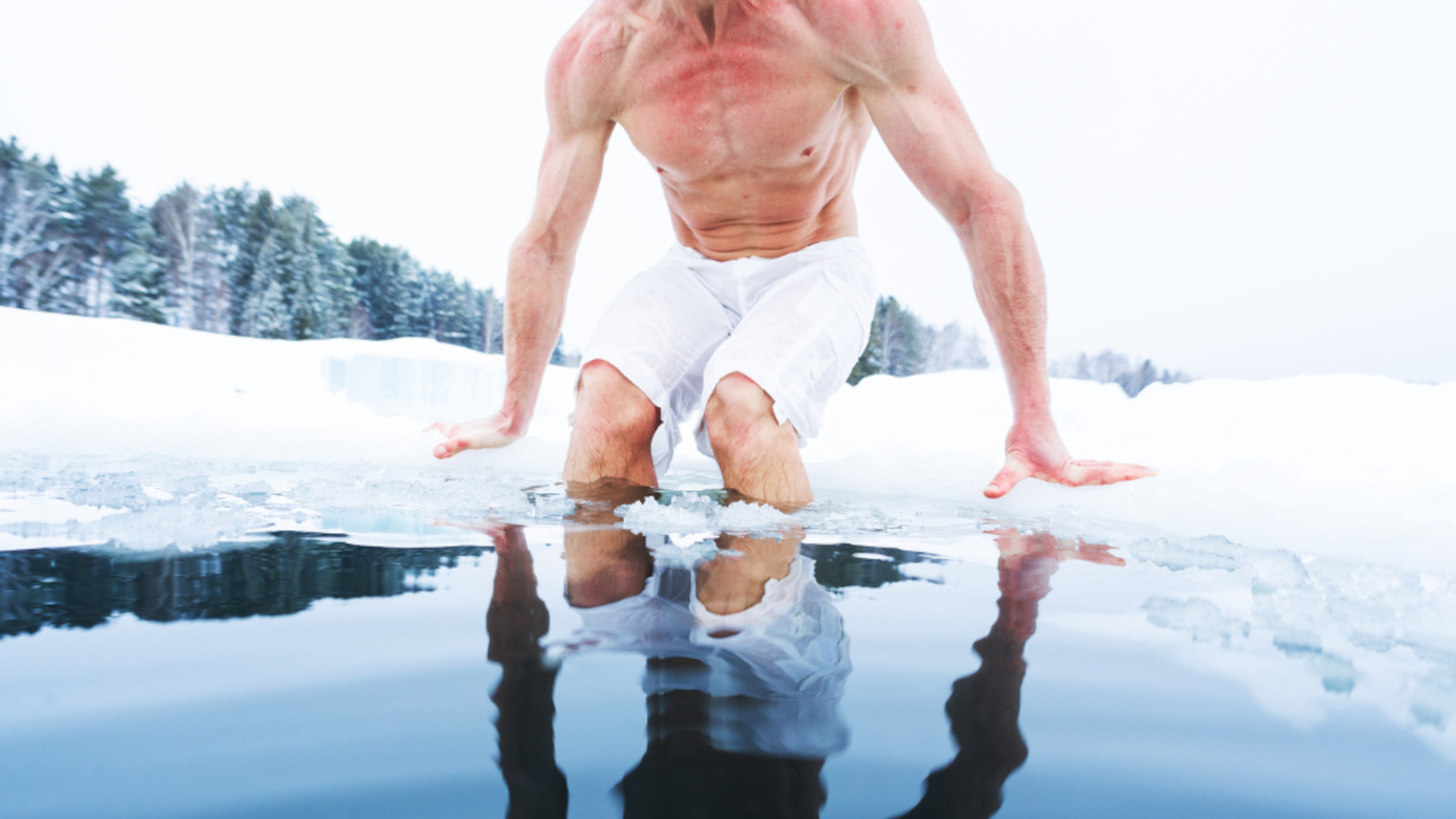 5 surprising benefits of cold plunges, according to research – and how to make the most out of them, whether you're out on a wild swim or at home doing a 'James Bond shower'
-
 I've been using the 'James Bond shower' method for years, and according to my smartwatch, it’s good for me — here's how to do it
-
 3 reasons to start swimming if you're over 50 – and all the kit you'll need
“Cryotherapy, or cold therapy, is used really widely in a lot of sports medicine for muscle injuries, but the evidence to support that in terms of muscle regeneration is really lacking,” she said. “Prior to this study, no human studies on muscle regeneration have been done, so we really wanted to fill that gap.”
How do you “injure” a muscle in a lab?
To properly study regeneration, the team needed real muscle damage, closer to a strain than exercise-induced soreness.
“The electrical stimulation that we use is where you put a probe into one of the nerves to cause damage that would be the equivalent of a strain,” explained Dr Bayne. A sample of 34 healthy men took part in the study which involved having their thighs put through 200 electrically stimulated eccentric contractions. This was not a gentle gym session; this process kills off a chunk of muscle fibres and triggers a full repair response, similar to a serious sports injury.
Over the following days, the researchers tracked strength, soreness, blood markers of muscle damage and, crucially, took muscle biopsies to see what was happening inside the tissue as it tried to heal. After the damage was done, participants were randomly assigned to one of three daily treatments for 10 days:
Get daily insight, inspiration and deals in your inboxContact me with news and offers from other Future brandsReceive email from us on behalf of our trusted partners or sponsorsBy submitting your information you agree to the Terms & Conditions and Privacy Policy and are aged 16 or over.- Cold water immersion: 15 minutes at 12°C
- Thermoneutral water: 30 minutes at 32°C
- Hot water immersion: 60 minutes at 42°C
The results
So what happened when they crunched the data?
The muscle's maximum strength took a hit after the simulated injury and had still not fully recovered after 10 days in any of the groups. Cold immersion did not speed this up. Heat did not magically restore power either, but it did change other markers that reveal how well the muscle is regenerating. Bayne and colleagues identified four ways hot water immersion seemed to help muscles bounce back quicker than cold water treatment .
The first was better blood flow and muscle waste clearance through improved circulation. “Hot water boosts blood flow to [the damaged muscle], delivers more oxygen, more nutrients to the damaged tissue, and then helps clear the waste production at a faster rate,” said Dr Bayne.
You may like-
3 reasons to start swimming if you're over 50 – and all the kit you'll need
-
 5 essential low-impact muscle-building moves for over 50s, according to an expert Peloton trainer
-
 7 abs exercises you can do with dumbbells, according to a Barry's Bootcamp fitness expert
In the study, people in the hot-water group reported less muscle soreness over the following days and had lower levels of muscle damage proteins (creatine kinase and myoglobin) in their blood than those using cold or neutral water.
The second restorative process was “heat shock” proteins, referred to as “the muscle’s internal repair toolkit”. “When you're exposed to heat, it triggers these protective proteins which stabilise muscle fibres and then supports that cellular repair,” explained Dr Bayne. The biopsies showed that two of these proteins were ramped up in the hot-water group but stayed flat or even blunted in the cold-water group.
The third indicator was that hot water treatment appeared to stimulate a faster switch from inflammation to healing. After an injury, your body undergoes an initial inflammatory phase (characterised by that typical inflamed swelling you see as part of injuries), but then the tissue switches into a calmer, rebuilding mode. In this study, hot water seemed to nudge that switch along.
“Hot water seems to accelerate pro-inflammatory to anti-inflammatory much faster than cold water. And we want that anti-inflammatory because that's the one that promotes healing, and often with cold, it gets stuck with the pro-inflammatory, so you have that inflammation for a longer period of time,” said Dr Bayne.
Finally, the team looked at pathways linked with rebuilding and creating muscle proteins. Bayne said:. “We think that heat may help maintain protein synthesis pathways, and these are kind of essential for rebuilding muscle, whereas cold blocks those signals.”
Summing all these findings up, Dr Bayne said: “Essentially, we found the warmer the temperature, the faster the regeneration.” Cold therapy, meanwhile, did not reduce pain or blood markers of damage compared with neutral-temperature or hot water, and it appeared to blunt some of the helpful responses seen with heat.
What this means for your post-workout routine
For elite athletes and clinicians, Bayne thinks these results “challenge the ‘ice for injury’ approach that everybody uses”. In her view, heat therapy “shows a promising reduction in pain and regeneration. Athletes and clinicians could use this as part of their rehabilitation after muscle injury, specifically strain.”
But what about delayed onset muscle soreness after a tough gym session or long run? Here, the evidence is still emerging. Bayne also mentioned a second study, due to be published next year, using more typical exercise rather than a lab-induced strain.
“We’ve shown the same thing, so heat will also be beneficial.”
Where ice has a role
None of this means ice baths are useless. Cold can still temporarily numb pain and there is some evidence it has mental health benefits. And according to this study, healing will happen when using cold water — just not as fast as heat.
The bigger shift may come in hospitals, where patients are routinely handed ice packs after injury and surgery. “I think the biggest thing we'll see is actually going to be in the hospital setting,” Dr Bayne said. “Now I think that's going to completely change.”
But the science is still emerging. “We're really at the start of it, and this is that proof of concept,” said Dr Bayne.
Future work needs to test heat therapy across different sports, injury types, and importantly in women. For now, though, if you are standing in the changing room wondering whether to brave the ice barrel or run a hot bath, the science suggests you can skip the shivers and turn up the heat instead.
Follow TechRadar on Google News and add us as a preferred source to get our expert news, reviews, and opinion in your feeds. Make sure to click the Follow button!
And of course, you can also follow TechRadar on YouTube and TikTok for news, reviews, unboxings in video form, and get regular updates from us on WhatsApp too.
 Lily CanterSocial Links Navigation
Lily Canter is a UK Athletics running coach, ultra-runner and a freelance running and fitness journalist who writes for TechRadar, Runner's World, Fit&Well and Live for the Outdoors, among others. Her ultra-running credits include running 250km across Tanzania, and placing first female in her inaugural 100km race.
View MoreYou must confirm your public display name before commenting
Please logout and then login again, you will then be prompted to enter your display name.
Logout Read more
3 reasons to start swimming if you're over 50 – and all the kit you'll need
5 essential low-impact muscle-building moves for over 50s, according to an expert Peloton trainer
7 abs exercises you can do with dumbbells, according to a Barry's Bootcamp fitness expert
 5 essential stretches office workers should be doing every day, according to an expert
 I tried to improve my sleep using expert advice for 4 weeks and recorded it all on my Oura Ring – and it worked
 5 fitness apps that can help you stick to your workout goals in 2026, according to science
Latest in Exercise Equipment
5 fitness apps that can help you stick to your workout goals in 2026, according to science
Latest in Exercise Equipment
 When I said I wanted a ‘new era of e-bike use’ this isn’t what I had in mind
 I tried an electric bike to get me back into gravel riding without the shame of being woefully unfit
 Casio redesigns an iconic G-Shock model – with Garmin-style screen tech
 I review e-bikes for a living, and these are my top 3 electric bikes from 2025
 DeerRun Q1 Classic treadmill review: A compact, no-fuss walking pad – but one for the ground floor
 Peloton revamps loads of its fitness equipment, introduces an AI-powered coaching features – and of course, hikes prices
Latest in Features
Peloton revamps loads of its fitness equipment, introduces an AI-powered coaching features – and of course, hikes prices
Latest in Features
 Everything we learned from the Pokémon Winds and Pokémon Waves official announcement trailer
 I added a soundbar to my TV – and no longer think they're essential for every screen
 The 3 best compact coffee makers for big flavor in a small package
 Nano Banana 2 shows off its powerful image creation enhancements
 School Spirits season 4 looks hopeful as star confirms story has 'mileage'
 Bridgerton season 5 is 'pretty much done' and starts shooting 'very soon'
LATEST ARTICLES
Bridgerton season 5 is 'pretty much done' and starts shooting 'very soon'
LATEST ARTICLES- 1Forget cold showers after a workout — according to an exercise scientist, 'the evidence to support that in terms of muscle regeneration is really lacking'
- 2'The goal was always to create engaging and varied content that supported players ideas and stories, not historical realism' — The Sims 4’s lead game designer talks Royalty and Legacy
- 3The 'dream OLED' TV tech upgrade may finally be on the way — CEO says it will improve 'efficiency, lifespan and color purity', and it's readying production
- 4With new Dead or Alive and Virtua Fighter projects in the works, there’s just one thing missing before we have a full 3D fighting game renaissance
- 5Soundcore's popular budget headphones have finally received a follow-up — with a price hike
.jpg?width=1200&auto=webp&trim=0%2C0%2C0%2C0)