 By Tom O'ConnorShareNewsweek is a Trust Project member
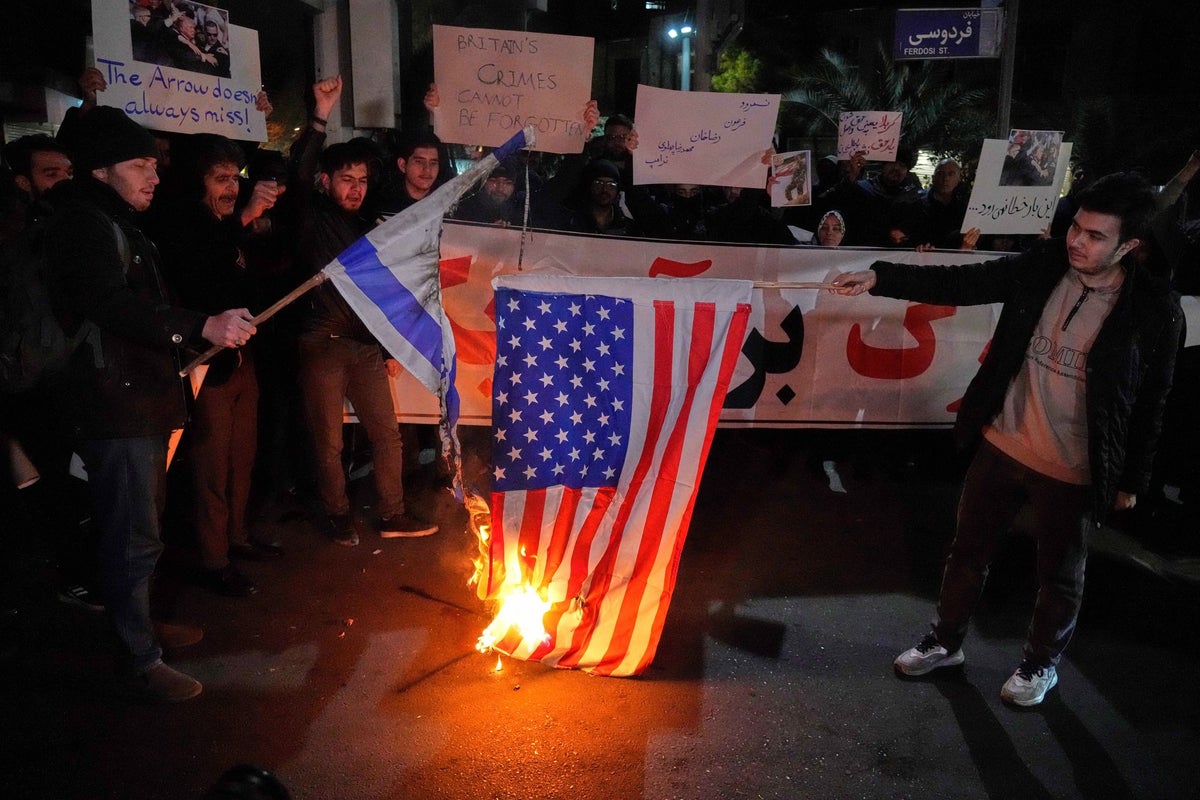
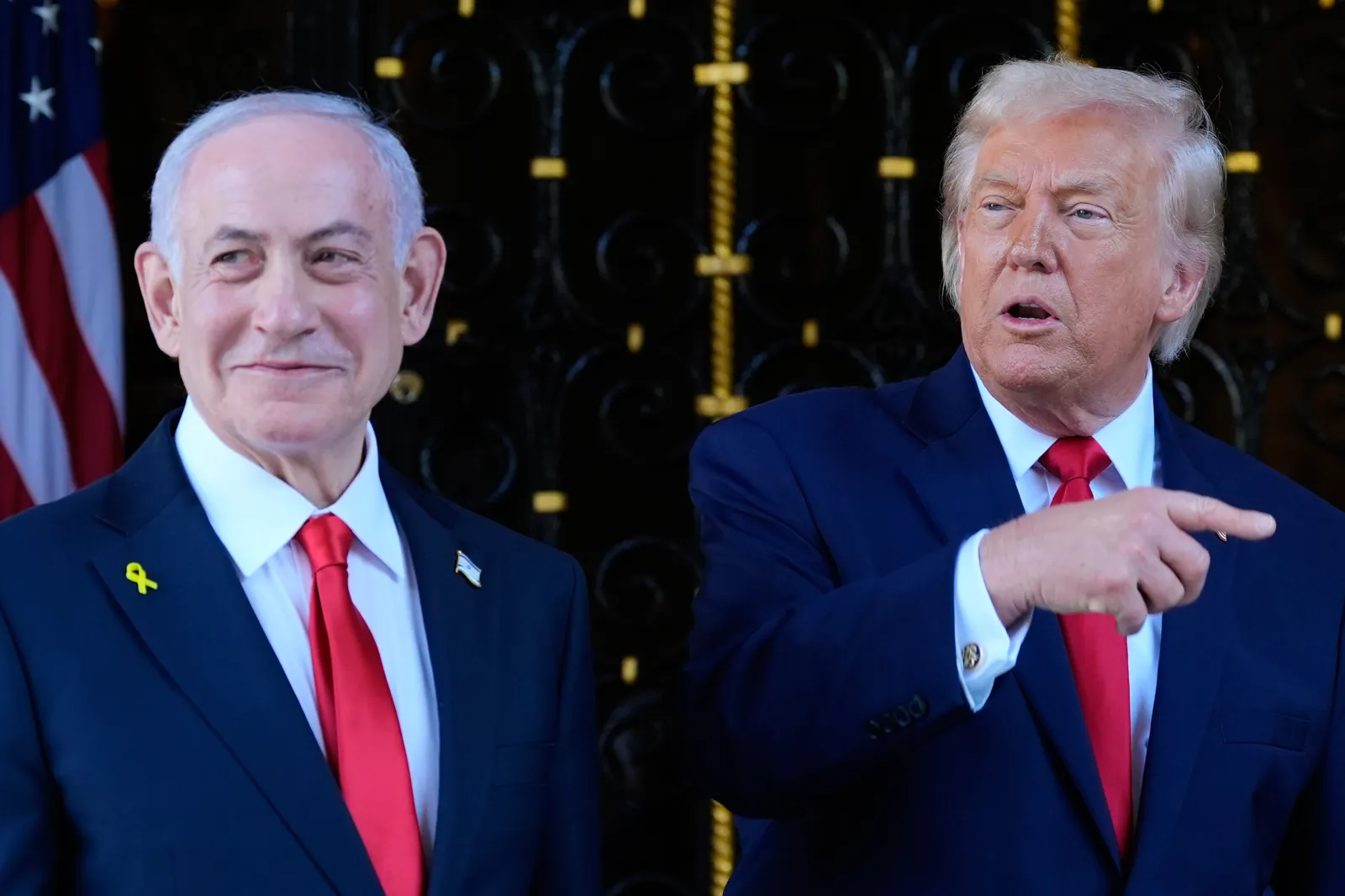
As signs mount of impending U.S. military action against Iran, Israeli Prime Minister Benjamin Netanyahu appears poised to play a role in realizing his long-awaited vision of putting an end to the Islamic Republic in the event of a U.S. attack.
Neither the White House nor the Pentagon has confirmed any plans to strike in line with President Donald Trump's warnings over the killing of protesters amid nationwide demonstrations, and the U.S. leader even appeared to de-escalate on Wednesday after being informed that planned executions in Iran would not move forward.
But reports indicate that some U.S. personnel have begun evacuating from key frontline positions in the Middle East, refueling aircraft were on the move, airlines had canceled in the region and foreign governments were warning against travel to Israel, measures that preceded the last U.S. strikes on Iran during its 12-day war with Israel in June.
While the scope of such an operation remains uncertain, a renewed U.S. assault could place the Iranian government under further pressure after grappling with the large-scale protests that threatened to undermine the rule of Supreme Leader Ayatollah Ali Khamenei.
From the perspective of Netanyahu, who is also dealing with a sustained wave of domestic dissent, it's a unique chance to score a decisive, final victory in a long-running confrontation with the Islamic Republic after systematically and, at times, dramatically, striking down Iran's constellation of allies across Israel's borders since the outbreak of the war in Gaza, thus rolling back a strategic depth established by Tehran over the course of decades.
Now that the fight has come to Iran, former officials say Israel is already preparing to play a role.
Amir Avivi, a retired Israel Defense Forces (IDF) lieutenant general who serves as founder and chair of the Israel Security and Defense Forum, told Newsweek, "The best scenario for Israel is being proactive and attacking first, and not letting them overwhelm us with an attack. And as all of this is unfolding and happening, you have this demonstration that started now, and the American attack that is imminent. And obviously, once the U.S. decides to lead an attack for Israel, it's a good scenario, providing that they do it before the Iranian attack.
"So, the question is the timing, when it is going to happen, and how strong will be the attack, and how much it will deal also with the military capabilities and the industry," Avivi said. "Israel will be involved one way or another, certainly on the defense, certainly talking about intelligence, but possibly also more than that. This is being coordinated."
 ...
...Crossing the Rubicon
The unprecedented direct exchange of fire between Iran and Israel that took place last June demonstrated Israel's undisputed air superiority over Iran as well as its willingness to strike unilaterally without waiting for the U.S. to spearhead an operation. When Trump did intervene, the targets were limited to three key nuclear sites that could only be penetrated by the kind of massive bunker buster bombs in the U.S. arsenal.
Iran, having retaliated to Israeli bombardment that targeted scores of personnel and sites related to Iran's military and nuclear industry by unleashing hundreds of missiles and drones against Israel, also responded to the U.S. bombings by conducting a missile strike against Al-Udeid Air Base in Qatar, the largest U.S. military installation in the Middle East. The following day, Trump announced a ceasefire had been reached, putting an end to the dozen-day confrontation.
A new round of strikes amid the recent turmoil in Iran, however, has the potential to go even further.
"The previous war was totally focused on military capabilities with no goal and no intention to overthrow the regime," Avivi said. "I think we're in a completely different scenario, and the intent is to overthrow the regime. And this means that this attack should not only deal with the military sites, talking about the production of ballistic missiles launchers sites that are related to the nuclear program or air defense, but also governmental sites, targeting the leadership itself, targeting the forces that are attacking the Iranian citizens."
Thus far, the Iranian government appears to have overcome any immediate existential threat posed by what many view as the most serious challenge to the Islamic Republic since its founding amid a popular revolution that ousted a pro-West monarchy in 1979. Iranian officials in recent days have begun to declare the restoration of order amid sizeable pro-government rallies and ongoing internet blackouts, while warning against foreign intervention.
Yet both Trump and Netanyahu have issued their own appeals to protesters to continue to take to the streets, messages that may soon be met with military support.
"Usually, the idea is that you cannot really overthrow a government if you don't have boots on the ground, but you have the only Iranian people boots on the ground fighting for liberty," Avivi said. "I think that the U.S. or U.S.-Israeli attack will assist dramatically the Iranian people to do what they need to do to storm all the sites of the government and take over the country."
"And I think we maybe will see peace agreement between Iran and Israel even before we will have a peace agreement with Saudi Arabia," he added.
The Crown Jewel
Winning over Saudi Arabia and defeating Iran have long been the leading goals of Netanyahu's vision for a "new Middle East."
At one point, he appeared to be on track to obtain the former, engaging in quiet talks backed by the U.S. to strike a normalization agreement with the kingdom, built on the Trump-backed Abraham Accords, which saw the United Arab Emirates, Sudan, and Morocco establish ties with Israel. But these hopes unraveled with the October 2023 attack launched by the Palestinian Hamas movement.
Since then, Netanyahu has doubled down on his aim of toppling Iran, whose Axis of Resistance allies intervened in the early stages of the war in Gaza. With relentless campaigns that devastated Hamas and the Lebanese Hezbollah movement and led to the elimination of longtime leaders, as well as the overthrow of Syrian President Bashar al-Assad, for which Netanyahu also took credit despite the charge being led by Islamist rebels also considered a threat by Israel, the Israeli premier has reshaped the regional security equation.
The victories also served to overshadow the original failure of detecting the Hamas-led surprise attack that sparked the regional war, along with a series of scandals and investigations that have led to a collapse in popularity for Israel's longest-serving prime minister.
"At a time when Trump strikes Iran or brings down the regime, or Israel has supported, it will be kind of a jewel in his crown, after October 7 and the blunder and the embarrassment and the tragic outcome inside Israel throughout this war, achieving great victories," Dan Arbell, a former Israeli diplomat serving as scholar-in-residence at American University, told Newsweek.
With Netanyahu having been "a crusader" on the Iran issue for his many years in office, Arbell said such an outcome "would be kind of a vindication," marking a "part of his legacy after he's gone."
But there are also motivations rooted in Netanyahu seeking to retain his grip on Israel's political scene as elections loom in October.
"For all these reasons, legacy, vindication and drawing attention away from his domestic woes, I think he would love to see that happen under his watch," Arbell said, "and he would love to contribute as much as he can to make it happen."
Newsweek has reached out to the Israeli Consul General in New York for comment.
Behind the Scenes
Yet Arbell argued that Israel would be unlikely to fire the first shot, preferring Trump to take the initiative before Israel would step in, though he said "you cannot rule out" a preemptive Israeli action.
"I think that Israel right now is kind of behind the scenes and doesn't want to be seen, though, as kind of leading the charge or actively spearheading this effort, and would rather have Trump do the so-to-speak, dirty work," Arbell said. "And then it'll perhaps follow up if there any kind of repercussions or any aftershocks to such a U.S. attack."
Yossi Kuperwasser, a reserve IDF brigadier general and head of the Jerusalem Institute for Strategy and Security, who previously led the Israeli Ministry of Strategic Affairs and IDF Military Intelligence Research Division, also felt that Netanyahu would likely be content with allowing the U.S. to lead the charge and respond only if Tehran strikes back or Washington asks for assistance.
"We are not going to participate, in my mind, kinetically, in this effort unless the Iranians are going to shoot at us," Kuperwasser told Newsweek. "If that were to happen, I guess we should respond very fearfully. But until that happens, we are going to support whatever the Americans are going to decide to do."
That said, if the U.S. were to request Israel's assistance, he added, "we should not leave them alone."
Request Reprint & LicensingSubmit CorrectionView Editorial & AI Guidelines Add Newsweek as a preferred source on Google to see more of our trusted coverage when you search.
Related Podcasts
Top Stories
 WorldAirlines To Avoid Iranian, Iraqi Airspace, As Officials Warn War is ‘Imminent’3 min read
 NewsDonald Trump Won’t Rule Out Leaving NATO Over Greenland5 min read
 For MembersNewsUncommon Knowledge: If Iran Is on the Brink, Californian Pistachios Helped Put It There4 min read
 NewsRepublicans Ripped For Flipping on Trump War Powers Effort3 min read
 PoliticsKristi Noem Impeachment Moves Forward: Full List of Sponsors5 min read
 PoliticsTim Walz Articles of Impeachment Threat: What We Know5 min read
Trending
 Air qualityThousands Advised To Stay Indoors in Oregon, Nevada, California, Georgia3 min read
 ArrestActor Kiefer Sutherland Arrested in Hollywood—What We Know3 min read
 WeatherWinter Storm Warning As 20 Inches of Snow To Strike5 min read
 Donald TrumpDonald Trump Sends Direct Message to Renee Good’s Father5 min read
 ChocolateChocolate Recalled Nationwide as Warning Issued3 min read
Opinion
 OpinionTrump and RFK Jr. May Usher in a Blue Tsunami | Opinion4 min read
 OpinionIn Transgender Sports Case, SCOTUS Must Side with Truth and Common Sense6 min read
 OpinionThe Trump Administration Is Moving To Fix a Broken Permitting System | Opinion4 min read
 For MembersOpinionConventional Wisdom: Fed Criminal Investigation Edition4 min read
 OpinionThe Case for Civil Unrest | Opinion5 min read